
This guide may contain affiliate links. If you buy through them, we may earn a small commission at no extra cost to you. Learn more.
The cabinet under the kitchen sink is the most awkward storage space in most homes. Pipes run through the middle, the disposal takes up a corner, and everything gets shoved to the back. The fix isn’t one magic organizer. It’s measuring the open spaces around the plumbing first, then choosing organizers that fit those gaps. This guide is for small kitchens where every inch counts.
Disclosure: We may earn a commission when you purchase through links on this page, at no additional cost to you.
The quick answer
- Measure the gaps, not the cabinet. The usable spaces are on either side of the pipes and above the drain trap.
- Pull-out drawers solve the “stuff at the back” problem. If you buy one thing, make it a sliding organizer.
- Use the cabinet doors. A door-mounted rack holds sponges, brushes and bags.
- Contain spills. A waterproof liner or tray protects the cabinet floor from drips and leaks.
- Keep the shutoff valves reachable. Never block access to the water shutoffs.
Before you buy: measure these four things
- Cabinet interior width, depth and height. Measure inside the face frame, since the door opening is often narrower than the inside.
- The pipe zone. Measure from each side wall to the nearest pipe, and from the cabinet floor to the bottom of the drain trap. These are your real organizer spaces.
- The door opening. An organizer has to fit through the opening to get in. Measure the narrowest point, including any center stile.
- Door clearance. If you’ll mount anything on the doors, measure how far the door can sit from the shelf edge when closed without hitting pipes or organizers.
Free printable: Under-Sink Measure Sheet
A diagram with spaces for every measurement.
How we chose these organizer types
- Fits around plumbing: adjustable or modular designs score higher.
- Makes the back reachable: sliding or pull-out access.
- Water resistance: materials that won’t swell or rust easily from drips.
- Install effort: tool-free is best; screw-in is fine if it’s simple.
- Honest drawbacks for every pick.
See our Editorial Policy.
6 under-sink organizer types worth considering
1. Two-tier sliding organizer
Our pick: Simple Houseware 2-Tier Pull-Out Cabinet Organizer Drawer · Walmart
- Best for: Bottles and cleaning sprays on one side of the pipes.
- Why it made the list: Pull the drawer out and everything comes to you. The two tiers use vertical space that’s usually wasted.
- Watch out for: The top tier may hit the drain trap. Check the total height against your pipe-zone measurement, and look for models with a removable or adjustable top shelf.
- Typical price range: $20–$60. Check current price
2. Expandable under-sink shelf
Our pick: Simplehouseware Under Sink 2-Tier Expandable Shelf (expands 15 to 25 in) · Amazon (link is a review; swap in retailer link)
- Best for: Cabinets where you want one shelf spanning the whole width.
- Why it made the list: Adjustable width and removable shelf panels let it straddle the pipes, so you get two levels of storage across the cabinet.
- Watch out for: Check the minimum and maximum width against your cabinet, and confirm the panels can be removed exactly where your pipes are.
- Typical price range: Check current price.
3. Door-mounted caddy or rack
Our pick: Brightroom Punched Metal Over-the-Door Cabinet Organizer · Target
- Best for: Sponges, brushes, gloves, a roll of trash bags.
- Why it made the list: It frees up floor space and keeps the small stuff where you can see it.
- Watch out for: Measure door clearance first. A rack that’s too deep keeps the door from closing. Our pick hangs over the door, so check that the hook fits your door’s thickness and that the cabinet still closes. Screw-in versions hold more weight.
- Typical price range: Check current price.
4. Clear bins with handles
Our pick: iDesign Stackable Storage Bin with Handles (set of 2, clear) · Lowe’s
- Best for: Grouping refills, dishwasher pods, and backup supplies.
- Why it made the list: Simple and flexible. Pull the whole bin out instead of digging.
- Watch out for: Bins without a slide still let things migrate to the back. Use them in the front of the cabinet or on a sliding base.
- Typical price range: Check current price.
5. Waterproof cabinet liner or drip tray
Our pick: Xtreme Mats Under Sink Kitchen Cabinet Mat · Walmart (several sizes)
- Best for: Every under-sink cabinet.
- Why it made the list: A small drip can swell the cabinet floor over time, especially in particleboard cabinets. A liner with raised edges catches it and makes cleanup easy.
- Watch out for: A liner hides leaks if you never look. Pair it with a quick monthly check, or a leak sensor.
- Typical price range: Check current price.
6. Tension rod for spray bottles
Our pick: Kenney 18–28 in Spring Tension Rod · Lowe’s
- Best for: Hanging spray bottles by their triggers.
- Why it made the list: One of the cheapest hacks there is, and it uses the empty space up high in the cabinet.
- Watch out for: Only works if you have clear width at the right height. Check it won’t interfere with the faucet supply lines.
- Typical price range: Check current price.
Putting it together: 30-minute reset
- Empty the cabinet. Toss empty bottles and products you don’t use.
- Check for leaks while it’s empty. Look for drips, water stains or soft spots.
- Clean and add the liner.
- Install the sliding organizer or shelf on the side with the most space.
- Hang the door caddy and a tension rod if they fit.
- Put back only what you use often. Store backup supplies elsewhere.
Budget example
| Priority | Item | Why |
|---|---|---|
| 1 | Liner or drip tray | Protects the cabinet |
| 2 | Sliding organizer | Makes the back reachable |
| 3 | Door caddy | Frees the floor |
| 4 | Bins or tension rod | Finishing touches |
Prices change often, so check current prices before you shop.
FAQ
How do I organize under a sink with a garbage disposal?
Treat the disposal as a fixed obstacle. Measure the space beside it and choose a narrow sliding organizer for that side, with a shelf or bins on the other side.
Should I store cleaning chemicals under the sink?
Many people do. If you have small children or pets, use a cabinet lock and follow the storage guidance on each product’s label.
What’s the best material for under-sink storage?
Plastic and coated metal hold up to moisture better than bare wood or cardboard.
How do I keep the cabinet from getting messy again?
Give every category its own bin or tier, and only put back what you use weekly.
Next step
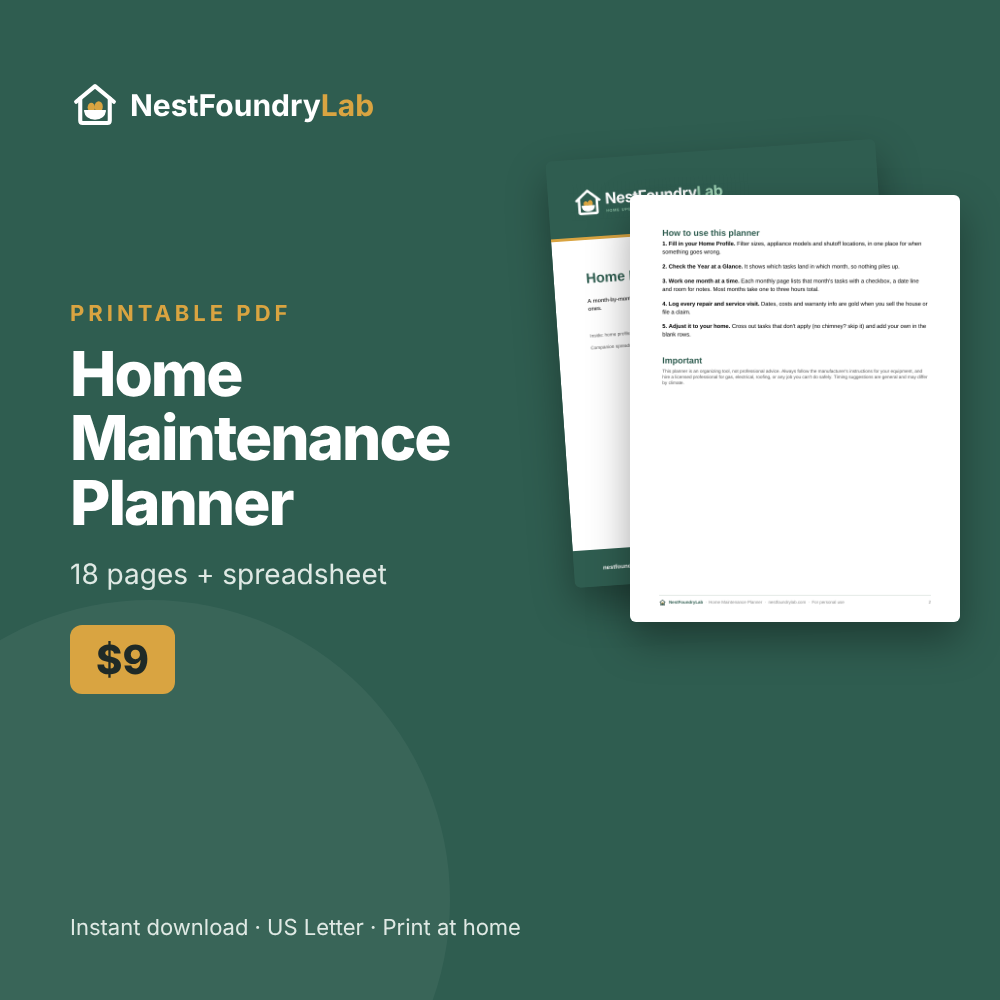
Want to keep your whole home this organized? The Home Maintenance Planner ($9) includes a monthly under-sink leak check along with every other recurring task.
Instant PDF download. Or get all 10 planners for $29.
Related: Pantry Organization on a $100 Budget · 10 Smart Home Upgrades Under $100
Save this guide for later on Pinterest